Content Marketing
AI Marketing Agents vs Automation: Why Rule-Based Workflows Fail
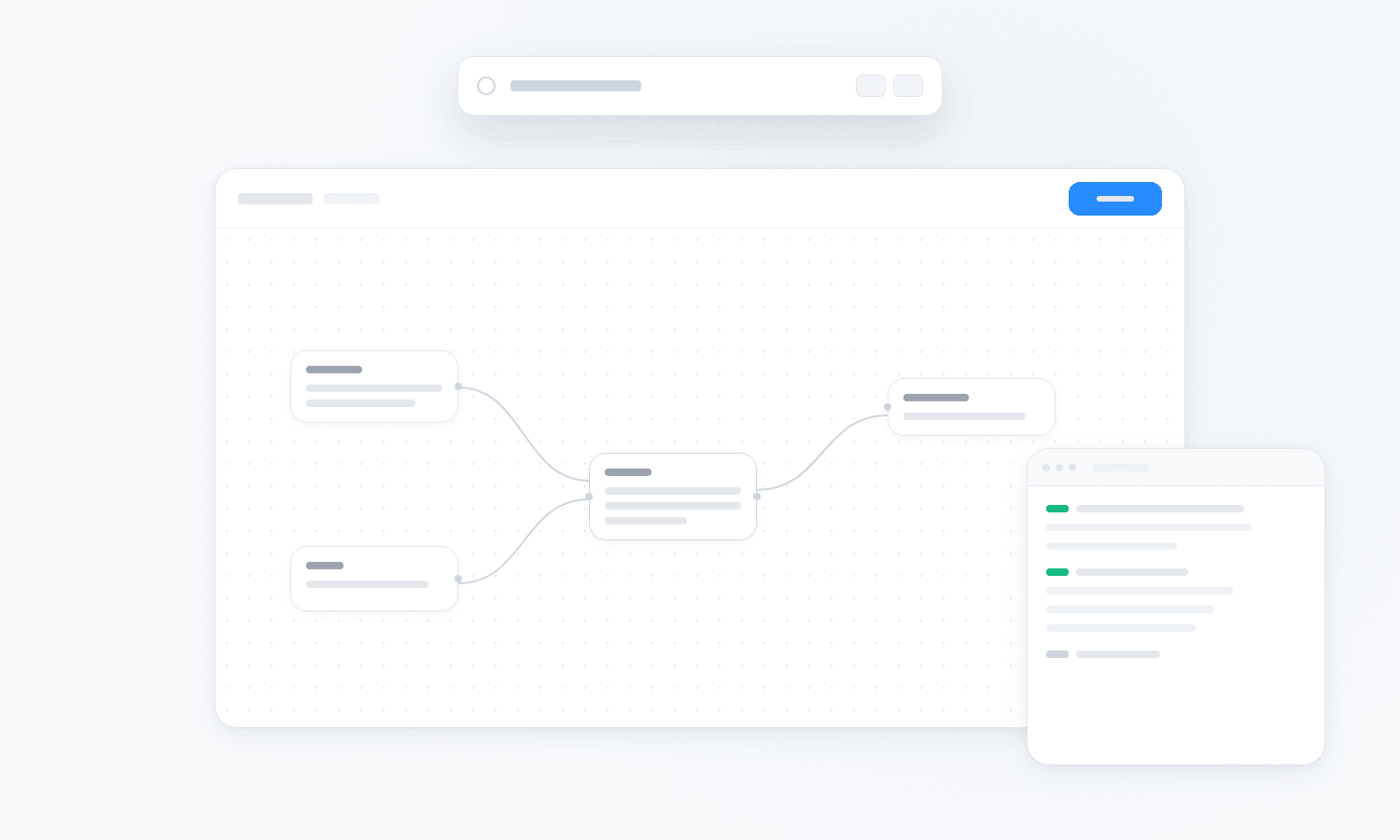
The primary difference between ai marketing agents vs automation lies in decision-making autonomy. While traditional automation follows rigid if-then logic defined by humans, AI agents use reasoning to achieve goals independently. For small teams, this shift replaces manual workflow management with goal-directed execution.
What is the difference between ai marketing agents vs automation?
The distinction between ai marketing agents vs automation is found in how the system handles uncertainty. Traditional automation is a deterministic tool that executes a pre-defined sequence of instructions. AI marketing agents are autonomous systems that use large language models to reason, plan, and execute tasks to reach a specific outcome without a fixed script.
Marketing automation is essentially a digital assembly line. You provide the materials and the sequence, and the software repeats the process. If a variable changes that the original script did not anticipate, the process stops or produces an error. This requires a human operator to monitor the system and adjust the logic regularly. For a founder, this creates a hidden management tax that grows as the business scales.
AI agents represent a departure from this manual oversight. An agent is a software entity that perceives its environment and takes actions to maximize its chances of successfully achieving a goal. In a marketing context, you do not tell an agent to send an email at 10:00 AM on Tuesday. Instead, you give it the goal of increasing newsletter open rates by 5% and provide it with access to your content and historical data. The agent then decides the timing, the subject line, and the segment based on its internal reasoning capabilities.
Traditional marketing automation relies on deterministic logic, where a human defines every possible branch of a customer journey. If a user clicks a link, the system sends an email. This approach works for simple triggers but breaks down during complex multi-channel campaigns. AI marketing agents represent a shift toward stochastic systems that interpret goals rather than following scripts. According to research, 76% of marketing leaders report that their teams spend more than 10 hours per week managing and fixing automated workflows (Salesforce, 2023). This management overhead negates the time-saving benefits for small teams. Agents solve this by monitoring performance and adjusting tactics without human intervention. Instead of building a fixed path, you provide a destination and the agent determines the most efficient route based on real-time data. This transition reduces the operational burden on founders who cannot afford a dedicated marketing operations manager to babysit rigid software (Salesforce, 2023).
Why do traditional rule-based workflows fail for small teams?
Rule-based workflows fail because they are brittle and require constant maintenance. For a small marketing team or a solopreneur, the time spent building and debugging complex if-then trees often exceeds the time saved by the automation itself. As your marketing strategy evolves, these rigid paths become technical debt that prevents rapid pivots.
The maintenance tax is the most significant hidden cost of traditional automation. Every time a platform updates its API or a social media algorithm changes, your rules may break. A rule that says post to LinkedIn every Monday at 9:00 AM does not account for a sudden shift in audience behavior or a holiday. The system will continue to execute the suboptimal rule until a human intervenes. For a B2B founder, this means the marketing system is never truly autonomous; it is just a faster way to make mistakes.
Complexity is the second point of failure. Modern marketing requires a presence across multiple platforms, each with unique formats and engagement patterns. Building a rule-based system that handles cross-platform coordination requires hundreds of interconnected logic steps. Small teams rarely have the creative bandwidth to design these systems correctly. When the logic becomes too complex, teams revert to generic, one-size-fits-all posting, which erodes brand authority and reduces organic reach.
The failure of rule-based systems is visible in the declining ROI of traditional marketing stacks. Statistics show that 44% of marketers believe their existing automation tools are too complex to be used effectively by their current staff (Salesforce, 2023). This complexity gap forces small companies to hire expensive agencies or specialists just to manage the software. In contrast, autonomous marketing tools remove the need for logic design entirely. Instead of configuring how a post is formatted for five different platforms, the user defines the brand voice and the desired outcome. The agent handles the programmatic rendering and platform-specific optimization. This shift allows a small team of one to three people to maintain a professional presence that previously required a full-service agency. By moving away from rule-based constraints, founders can focus on high-level strategy while the execution engine adapts to real-time changes in the digital environment (Salesforce, 2023).
How do agentic marketing workflows transform content production?
Agentic marketing workflows transform production by moving from template-filling to context-aware creation. Unlike standard automation which might just repost a blog link to social media, an agentic workflow analyzes the core message of the source material and reformats it specifically for the nuances of each social platform.
A typical agentic marketing workflows structure involves several specialized agents working in sequence. One agent might be responsible for brand voice alignment, ensuring every sentence matches the founder's specific tone. Another agent handles the visual design, selecting layouts that perform best for the current topic. A third agent acts as a reviewer, checking the output for logical consistency and removing common AI writing patterns before the content goes live. This multi-agent coordination mimics the structure of a professional marketing department.
This process is vastly different from using a basic AI writing tool. Standard tools generate a single block of text based on a prompt. Agentic workflows use a feedback loop. If the brand voice agent rejects a draft, the writer agent must iterate until it meets the standards. This recursive process results in higher quality output that feels designed by a senior creative rather than a machine. It eliminates the generic feel that often plagues automated social media feeds.
The adoption of agentic systems is accelerating as companies seek to improve efficiency without sacrificing quality. Industry analysts predict that by 2026, 40% of large enterprise marketing tasks will be handled by autonomous agents that require minimal human supervision (Gartner, 2024). While large enterprises are the early adopters, the technology is most valuable for small teams with limited creative bandwidth. These agents can process vast amounts of data to determine which content types are currently trending in a specific niche. For example, if data shows that short-form video is currently generating 2.5 times more engagement than static images in the SaaS sector, the agent can prioritize video scripts over graphic design (Socialinsider, 2024). This level of responsiveness is impossible with static automation rules. By employing agentic workflows, small businesses can match the production quality and strategic depth of much larger competitors without increasing their headcount or overhead (Gartner, 2024).
How do ai marketing agents vs automation compare in practice?
The practical differences are most apparent when comparing setup time, maintenance requirements, and the quality of the final output. Automation requires high upfront effort for low long-term flexibility, while agents require low upfront effort for high long-term adaptability. The table below summarizes these distinctions for B2B founders.
Feature | Traditional Automation | AI Marketing Agents |
|---|---|---|
Logic Type | Deterministic (If-Then) | Probabilistic (Reasoning) |
Setup Effort | High (Manual logic building) | Low (Goal definition) |
Maintenance | Frequent manual updates | Self-optimizing |
Content Quality | Templated and repetitive | Contextual and varied |
Adaptability | Breaks with change | Adapts to data signals |
Staff Required | Marketing Ops Manager | Founder or Generalist |
Using a marketing agent platform comparison reveals that the most effective systems integrate directly into existing communication channels. At Situational Dynamics, we built an infrastructure that allows B2B founders to approve marketing content from their inbox, removing the need to log into complex dashboards. This is a primary example of how the agentic model prioritizes founder time over technical configuration.
What are the core components of goal driven marketing ai?
Goal driven marketing ai is built on three pillars: objective setting, autonomous planning, and closed-loop execution. Instead of managing tasks, you manage outcomes. You define the desired state, such as a consistent LinkedIn presence with two high-quality posts per day, and the AI determines the optimal path to reach it.
Objective setting involves defining your brand identity and target audience parameters. This serves as the North Star for the agent. In a goal-driven system, the AI does not just post for the sake of posting. It evaluates every piece of content against the objective of establishing founder authority or generating leads. If a post does not align with the established brand DNA, the system iterates or alerts the user before publishing.
Autonomous planning is the engine that drives the agent. The system looks at your content calendar, identifies gaps, and decides what to create next based on past performance data. It might notice that technical deep dives perform better on Tuesdays while founder stories resonate more on Fridays. The planning agent adjusts the schedule automatically. Closed-loop execution means the system monitors the results of its actions and feeds that data back into the planning phase for the next cycle.
The efficiency of goal-driven systems is fundamentally changing how small businesses allocate their marketing budgets. Market data indicates that 58% of B2B marketers are already using AI to create more personalized content experiences for their audiences (HubSpot, 2024). This personalization is not achieved through manual segmentation but through autonomous agents that can tailor messaging at scale. For a solopreneur, this means having the ability to speak directly to different buyer personas without writing individual posts for each. The agent understands that a CTO cares about technical reliability while a CEO cares about ROI, and it adjusts the copy accordingly. This level of sophistication previously required a large content team. By leveraging goal driven marketing ai, founders can ensure their message remains relevant to every segment of their market, leading to higher conversion rates and stronger brand loyalty over time (HubSpot, 2024).
How do predictive ai campaigns optimize content reach?
Predictive ai campaigns use historical performance and real-time market signals to determine the best possible content strategy. Rather than following a static calendar, these campaigns are dynamic. The system predicts which topics will gain traction and which formats will maximize reach in the current social media climate.
The power of predictive ai campaigns lies in their ability to analyze data at a scale impossible for humans. An AI agent can scan thousands of posts in your industry to identify emerging trends before they become mainstream. It can then suggest content ideas that capitalize on those trends while they are still fresh. This proactive approach ensures your brand stays ahead of the competition and maintains a high level of relevance.
Predictive systems also optimize the technical aspects of publishing. This includes determining the exact minute to post for maximum visibility and identifying which keywords will trigger the most favorable algorithm response. Because the agent is always learning, it becomes more effective with every post it publishes. It moves beyond simple scheduling into the realm of strategic distribution, ensuring your best ideas get the attention they deserve.
The measurable impact of predictive optimization is significant for organic growth strategies. Analysis of social media engagement shows that posts optimized for specific audience peak times and format preferences can see a 3.2 times increase in reach compared to non-optimized content (Socialinsider, 2024). For a small business, this increase in organic reach can be the difference between a stagnant feed and a lead-generating asset. Traditional automation lacks this predictive layer, relying instead on the user's best guess for scheduling. AI agents remove the guesswork by continuously testing variables and doubling down on what works. As the cost of paid acquisition rises, the ability to maximize organic visibility through predictive AI becomes a critical competitive advantage. This allows founders to build a sustainable audience without the constant need for ad spend or manual trial and error (Socialinsider, 2024).
How do you perform a marketing agent platform comparison?
A marketing agent platform comparison should focus on four criteria: brand alignment, operational overhead, integration depth, and output quality. Many tools claim to be AI agents but are simply glorified wrappers for standard chat models. A true agentic platform provides a full infrastructure for content lifecycle management.
Brand alignment is the most critical factor. Does the platform allow you to upload your brand style guide, past writing samples, and visual assets? A platform that produces generic content is a liability. Look for systems that offer a Brand DNA extraction process, ensuring the AI understands your unique perspective and technical expertise. This is what separates a professional social media presence from an obvious bot-run account.
Operational overhead is the second criterion. If you have to log into a new dashboard every day to prompt the AI, you have not solved the time problem; you have just changed the task. The best platforms are invisible. They should integrate with your existing tools like Slack, email, or your CMS. The goal is to spend your time on final approval, not on managing the machine. A successful implementation of autonomous marketing tools should feel like having a senior marketing manager on your team.
The market for AI-driven marketing solutions is expanding rapidly as the technology matures. Current projections estimate that the global market for AI in marketing will grow at a compound annual rate of 28.6% through 2030 (Statista, 2024). This growth is fueled by the demand for tools that can handle end-to-end workflows rather than just single tasks. When evaluating platforms, founders must look for those that provide programmatic rendering of graphics and multi-platform distribution as standard features. A comprehensive platform comparison reveals that fragmented tools lead to data silos and inconsistent branding. In contrast, integrated agentic platforms maintain a single source of truth for your brand, ensuring that every post on LinkedIn, Instagram, or your blog is coherent and strategically aligned. This unified approach is essential for building long-term brand equity in a crowded digital market (Statista, 2024).
What is the future of marketing with autonomous agents?
The shift from ai marketing agents vs automation marks the end of the software-only era and the beginning of Software-with-a-Service (SwaS). In this new model, you are not buying a tool that you have to learn; you are buying a result. The platform provides both the infrastructure and the labor required to run your marketing engine.
This evolution is particularly beneficial for B2B founders who need to build authority but lack the time to write. By delegating the execution to an autonomous system, you can focus on the core business activities that drive revenue. You become the editor-in-chief of your brand rather than the social media manager. This shift allows you to maintain a high-frequency posting schedule that would otherwise lead to burnout.
Ultimately, the goal of moving from automation to agents is to create a marketing presence that compounds over time without increasing your workload. As the AI learns your preferences and your audience's reactions, the quality and effectiveness of your content improve. This creates a virtuous cycle where your organic reach grows, your cost per lead drops, and your brand becomes a dominant voice in your industry. The future belongs to those who use these agentic workflows to out-publish and out-think their competitors with zero operational overhead.
References
The State of Marketing Report 2023. Salesforce, 2023.
Gartner Predicts 2024: AI Agents Will Change How We Work. Gartner, 2024.
The State of AI in Marketing 2024. HubSpot, 2024.
Social Media Industry Benchmarks 2024. Socialinsider, 2024.
Artificial Intelligence in Marketing Market Size and Growth. Statista, 2024.